Entrepreneur
How a golfer turned a 10-year-old idea into an App Store app
Keith McGonigle had no coding background and a 10-year-old idea. With Thunkable’s AI, he built FOREcast, a 5-star golf weather app, and got it on the App Store in about a week.

How to Build a No-Code MVP Without a Technical Co-Founder
Before you hire developers or chase a technical co-founder, find out whether people actually want your app. This guide walks through building a no-code MVP in five steps: pick the one question to answer, describe your app to AI, add sign-in, data and payments, publish to the stores, and test with real users. Plus the three tests worth running and the mistakes that undercut them.

Agentic Engineering: The Next Level After Vibe Coding
Andrej Karpathy coined “vibe coding” in February 2025. A year later, he proposed a new name for how serious builders work with AI: agentic engineering. The AI still does most of the writing, but you direct it, test the results and fix what’s off. Here’s what the term means, how it differs from vibe coding, and why it matters for anyone building an app to publish.


Thunkable vs the top AI app builders: which one actually gets your app into the App Store?
AI app builders all promise an app from a prompt, but for most that means a website or a codebase to maintain. We compared eight popular tools (Lovable, Replit, FlutterFlow, Adalo, Bolt.new, Base44, Emergent and Bubble) on three questions: Is it truly native? Can you fix it yourself when the AI falls short? How hard is publishing? Here’s which builder fits when mobile is the goal, and when it isn’t.

How Vibe Coding Changed No-Code App Building
Vibe coding, a term coined by AI researcher Andrej Karpathy in 2025, means building software by telling AI what you want and refining it through conversation. For no-code builders, that's a big shift. Instead of assembling your app one block at a time, you can start with a description and let AI generate the screens, design, and logic for you. That means faster iteration and a lower barrier to getting your idea in front of real users. You're still in charge, though. You decide what your app should do, whether it truly serves your users, and whether it works on a real device before you ship it. With Thunkable's AI Builder, you can vibe code a native mobile app from the start. You can refine it with prompts, blocks, or code, test it on your phone, and publish it to the App Store or Google Play.

Thunkable vs. the AI App Builder Field: How the 2026 Options Actually Compare
The AI app builder field is crowded, and most of it stops at a web prototype. Here's an honest breakdown of what each tool is actually built for, and where Thunkable fits.

Going from Designer To Mobile App Founder - Sound AiSleep
Using Thunkable, a non-technical founder saved over $65,000 in development costs and launched Sound AiSleep on the App Store all on her own.

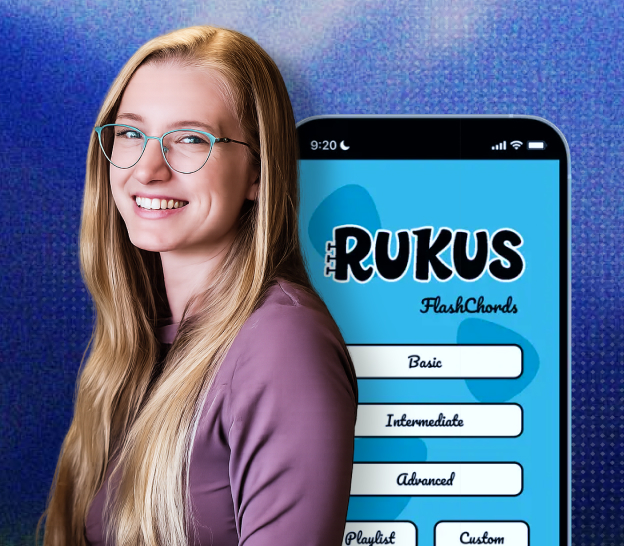
How a Quiet Moment Led to Rukus
Rukus began as a small personal project by Brooke Muse, who wanted a simpler way to practice guitar after time away. Using Thunkable, the idea quickly turned into a working app that could be tested, iterated on, and published without programming experience.
2025 Thunkable No-Code App of the Year
Showcasing the top no-code app creators of 2025 from the Thunkable community.
Explore More Resources
Discover ebooks, webinars, blogs, and apps built on Thunkable.

Blog
Check out our blog with tips, tricks, and stories to help you with no code mobile app development.

Community
Swing by the Thunkable Community to connect with our global network of app creators.

Documentation
Read our documentation for step-by-step instructions on anything you could want to know about Thunkable.

Creator Gallery
Browse our gallery of available apps from our global network of Thunkable Creators.
What Will You Create?
Ready to take your first steps towards developing that amazing idea? Get started on your app for free.
Start for Free
Personalized Onboarding
